Date
Category
Agentic AI
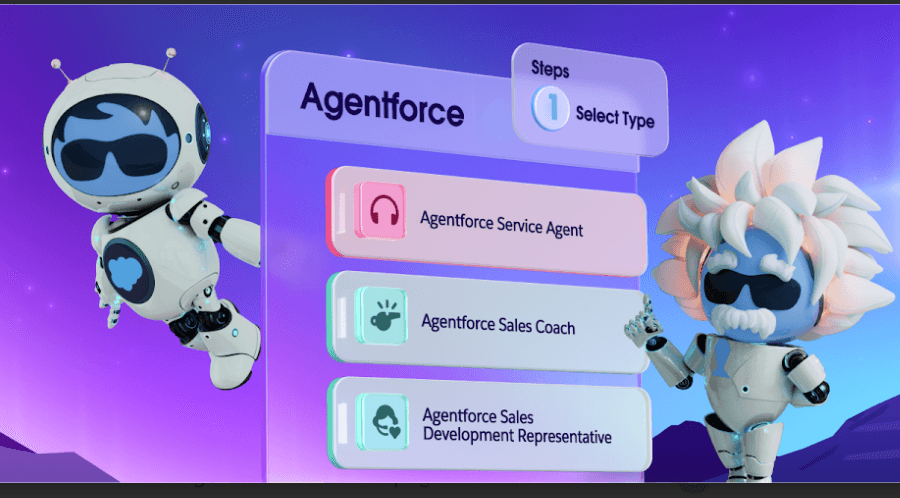
The promise of low-code automation was one of the most commercially powerful ideas in modern enterprise software. Businesses stopped writing massive custom codebases for every process, stopped maintaining brittle scripts, and started building workflows visually with clicks. Flows, Process Builder, and Approval Processes made automation feel like a utility. Fast to build, easy to change, and accessible to citizen developers.
April 2026 made that promise evolve again. With the rapid adoption of Agentforce, Salesforce introduced true agentic automation that goes far beyond traditional declarative tools. Agents do not just follow predefined steps. They reason, plan, use tools, ground decisions in real-time data, and execute multi-step processes autonomously. What used to be rigid workflows became dynamic, intelligent digital workers.
The shift is not just incremental. It fundamentally changes what automation means inside an organization.
The New Autonomy Risk Problem
The move to agentic systems has created a new category of risk that most organizations have not fully priced in: autonomy risk.
A business that relies on Agentforce agents to handle lead qualification, case resolution, order processing, and proactive customer outreach has concentrated decision-making authority into AI systems that operate with varying degrees of independence. The probability of any single agent making a suboptimal decision is low. The impact when it compounds across hundreds of customer interactions or internal processes can be significant.
This is not a theoretical concern. Early 2026 implementations have already surfaced cases where agents, lacking proper guardrails or grounding, escalated issues incorrectly, misapplied business rules, or executed actions outside intended parameters. The pattern is not that Agentforce is unreliable. The pattern is that as more operational responsibility shifts from humans and rigid Flows to autonomous agents, the blast radius of any single reasoning or execution error grows.
For organizations running high-volume agent workloads, the autonomy risk is compounded. Agents that interact with external systems via MuleSoft, update records in real time, or trigger financial actions carry both operational and compliance implications. When an agent deviates from expected behavior, it does not just slow a process. It can create downstream data inconsistencies, customer experience gaps, or regulatory exposure.
Guardrails and Governance Are Not Overkill
The standard response to AI risk concerns is to keep agents tightly constrained with simple prompts and basic Flows. Many organizations still treat Agentforce as an enhanced version of their old automation stack. That calculus is changing fast.
Effective Agentforce governance does not require locking every agent into fully deterministic behavior. A tiered approach is more practical: identify the processes that can tolerate higher autonomy, define clear success criteria and boundaries for each tier, and apply the appropriate level of oversight those objectives require. Customer-facing service agents warrant strong reasoning guardrails, tool-use constraints, and human-in-the-loop escalation. Internal data enrichment or research agents can operate with lighter supervision and broader tool access.
For Agentforce specifically, governance means thinking carefully about:
How agents ground their reasoning in trusted Data Cloud data
Which tools and actions are explicitly allowed or denied
How Agent Scripts and reasoning traces are monitored and evaluated
What fallback behaviors activate when confidence is low
Integration Architecture and Agent Resilience
Agentforce success is not just a prompting or model decision. It is an integration and governance architecture decision. Every tool call, every data query, every action an agent takes is a dependency that inherits the reliability and compliance characteristics of the underlying systems.
Building resilience into Agentforce means making explicit decisions at every layer: clear permission boundaries using Salesforce Platform Shield and Agent-specific access controls, observable reasoning traces and evaluation frameworks to catch drift early, human escalation paths that activate automatically based on confidence scores or business impact thresholds, and version control and testing strategies for agent configurations, similar to how we treat Flows and Apex today.
At the architectural level, this requires treating agents as first-class citizens in your enterprise integration fabric. Not as experimental side projects. Combining Agentforce with MuleSoft Agent Fabric, Einstein Trust Layer, and robust Data Cloud foundations creates a control plane that keeps autonomy safe and auditable.
The Future of Work Infrastructure Overlap
The intersection of traditional automation and agentic AI is where the opportunity is highest in 2026. Organizations that have moved significant operational weight onto Agentforce agents for customer interaction, process automation, or decision support have created a new layer of digital workforce that did not exist two years ago.
That digital workforce needs to be engineered with the same rigor as any other critical system. Agents should have defined performance metrics, clear boundaries, and transparent escalation paths. Monitoring should surface behavioral anomalies before they manifest as business impact.
The businesses that build this governance discipline now are making an investment that compounds. As agent adoption scales toward multi-agent orchestration and higher levels of autonomy, the cost of not having proper guardrails and architecture grows exponentially. Getting the foundations right at current scale is significantly cheaper than retrofitting controls into a system that has already become core to operations.
Agentforce changes how we build enterprise automation. It moves us from static workflows to dynamic, reasoning digital workers. Treat that shift as a strategic architectural decision. Not just another automation tool. And your organization will be ready for the agentic era.